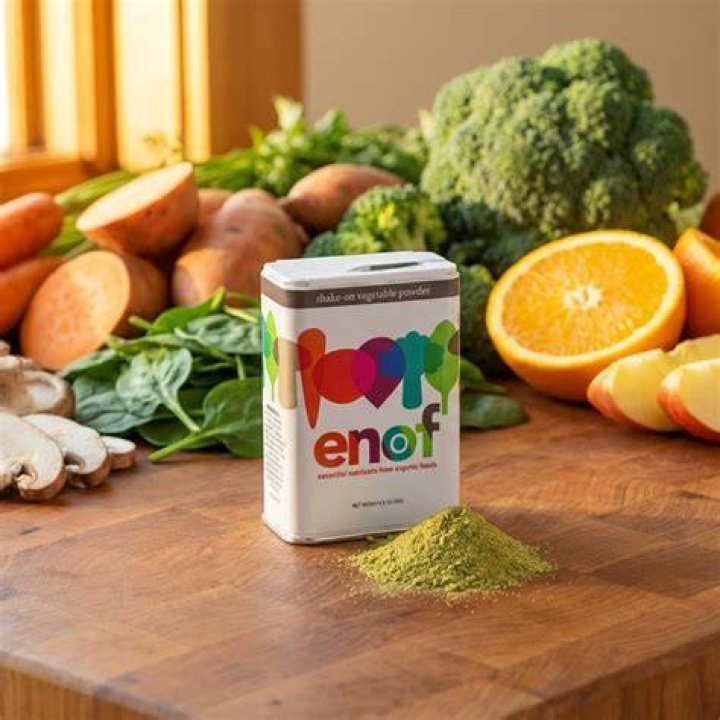
ENOF: The Truth Behind the Organic Fruit & Vegetable Powder Revolution

It sounds almost too good to be true. A single, flavorless spoonful of powder that delivers the nutritional equivalent of two and a half servings of fruits and vegetables. No chewing. No chopping. No bitter aftertaste. This is the promise of ENOF, a product that has quietly been generating buzz in health-conscious circles and among parents desperate to get their children to eat anything green.
But in an industry flooded with green powders, synthetic supplements, and bold claims, what is the real story behind ENOF? We spent weeks analyzing the science, the ingredients, and the manufacturing process to bring you the unvarnished truth. This is not a paid promotion. This is an investigation.
| Attribute | Details |
|---|---|
| Product Name | ENOF |
| Category | Organic Whole Food Powder |
| Key Ingredients | Sweet potato, mushroom, spinach, carrot, broccoli, orange, apple, strawberry, sunflower seed |
| Serving Size | 1/12 teaspoon (approx. 0.4g) |
| Nutritional Equivalent | 2.5 servings of fresh fruits & vegetables |
| Calories per Serving | 0 |
| Dietary Features | Vegan, Gluten-Free, Dairy-Free, Soy-Free, Non-GMO |
| Price per Serving | $0.44 – $0.74 |
| Guarantee | 30-day money-back guarantee |
The Core Promise: What Exactly Is ENOF?
ENOF is not a multivitamin. It is not a synthetic concoction. According to the company, it is 100% organic whole food, freeze-dried and ground into a fine, flavor-neutral powder. The ingredient list reads like a farmer’s market haul: sweet potatoes, mushrooms, spinach, carrots, broccoli, oranges, apples, strawberries, and sunflower seeds. No fillers. No artificial colors. No added sugar.
The claim that a single 1/12 teaspoon can provide up to 90% of the daily value for vitamins A, C, D, E, K, B6, B7, thiamin, and folate is what sets it apart from competitors. Most green powders require a heaping scoop. ENOF requires a pinch.
The Proprietary Freeze-Drying Process
How do they pack so much nutrition into such a small space? The answer lies in the manufacturing. ENOF uses a two-step process. First, the whole produce is coated with a plant-based barrier designed to lock in phytonutrients. Second, a proprietary freeze-drying method removes the water content while preserving the micronutrient profile. The result is a concentrated powder that retains the nutritional fingerprint of the original ingredients.
This is a critical distinction. Standard dehydration often destroys heat-sensitive vitamins like vitamin C and B-complex. Freeze-drying, when done correctly, preserves them. ENOF claims their process retains "almost all" phytonutrients. Independent third-party testing would be needed to verify this, but the principle is scientifically sound.
Who Is ENOF Actually For?
ENOF’s marketing targets a broad audience, but the product seems specifically designed for three distinct groups.
Parents of Picky Eaters
This is the emotional core of the brand. The company’s website and testimonials are filled with stories of parents who struggled to get their children to eat vegetables. ENOF’s flavor-neutral profile means it can be mixed into a glass of milk, a bowl of oatmeal, or a plate of pasta without altering the taste. For a parent who has tried everything, this is a lifeline.
Busy Professionals and Athletes
For those who know they should eat more produce but lack the time to prep, wash, and cook, ENOF offers a shortcut. A single serving can be stirred into a morning coffee or a post-workout smoothie. The zero-calorie, no-sugar formula is particularly appealing to those tracking macros.
Individuals with Dietary Restrictions
Because ENOF is gluten-free, dairy-free, soy-free, and vegan, it fits into nearly every restrictive diet. It is also free from the top eight allergens, making it a safe option for those with food sensitivities.
The Science of Whole Food vs. Synthetic Vitamins
One of ENOF’s strongest selling points is its insistence on being "pure food, not a supplement." This is not just marketing jargon. There is a growing body of research suggesting that the body absorbs and utilizes nutrients from whole foods more efficiently than from isolated synthetic vitamins.
For example, vitamin E from sunflower seeds comes with a complex of tocopherols and tocotrienols that work synergistically. Synthetic vitamin E often contains only alpha-tocopherol. Similarly, the beta-carotene in carrots is converted to vitamin A by the body as needed, reducing the risk of toxicity that can occur with high-dose synthetic vitamin A supplements.
ENOF leverages this whole-food synergy. However, it is important to note that while ENOF provides a broad spectrum of vitamins, it does not cover every micronutrient. It is not a complete multivitamin replacement. The company itself states it is "best used as a dietary supplement, not a full replacement."
Cost Analysis: Is ENOF Worth the Price?
At $0.44 to $0.74 per serving, ENOF is not cheap. A daily regimen of two servings would cost roughly $1.00 to $1.50 per day. For a family of four, that adds up quickly.
But context matters. A single serving of organic fresh produce can cost anywhere from $0.50 to $2.00, depending on the season and location. When you factor in the waste—spoiled spinach, moldy berries—the cost of real produce can be even higher. ENOF eliminates waste entirely. The powder has a shelf life of two years.
Compared to other green powders on the market, ENOF is mid-range. Athletic Greens, for example, costs over $3.00 per serving. ENOF is significantly cheaper. But it also offers fewer ingredients. Athletic Greens contains 75 ingredients including probiotics and enzymes. ENOF contains ten.
The Subscription Model
ENOF is available through a subscription model, which lowers the per-serving cost. The company also offers a 30-day money-back guarantee, reducing the financial risk for first-time buyers. This is a smart strategy. The barrier to entry is low, and the product’s effectiveness is subjective enough that many users may not notice a difference in 30 days.
Potential Drawbacks and Red Flags
No product is perfect. Our investigation uncovered several points of concern that potential buyers should consider.
Lack of Independent Third-Party Testing
ENOF’s website mentions that the product is "tested for contaminants," but it does not provide links to independent lab reports. In an industry plagued by heavy metal contamination and adulteration, transparency is paramount. Consumers should demand to see Certificates of Analysis (COAs) from accredited labs.
The "Flavor-Neutral" Claim
While many users report that ENOF is truly tasteless, some reviews on third-party sites mention a slight earthy or grassy note. This is not surprising given the ingredient list. Mushroom and spinach powders have distinct flavors. The company’s proprietary coating may mask these flavors, but individual palates vary.
Not a Replacement for Whole Produce
This is the most important caveat. ENOF provides vitamins and minerals, but it does not provide fiber in meaningful amounts. A single serving of ENOF contains negligible fiber. Whole fruits and vegetables provide bulk, water, and fiber that support digestion and satiety. Relying solely on ENOF could lead to digestive issues.
How ENOF Compares to Other Green Powders
The green powder market is crowded. Brands like Athletic Greens, Amazing Grass, and Garden of Life dominate the shelves. How does ENOF stack up?
- Ingredient Count: ENOF (10) vs. Athletic Greens (75). ENOF is simpler and more focused.
- Serving Size: ENOF (1/12 tsp) vs. Athletic Greens (1 scoop). ENOF is dramatically smaller.
- Calories: ENOF (0) vs. Amazing Grass (35). ENOF is calorie-free.
- Fiber: ENOF (negligible) vs. Garden of Life (3g). ENOF lacks fiber.
- Probiotics: ENOF (none) vs. Athletic Greens (included). ENOF does not support gut health directly.
ENOF’s unique selling point is its concentration and convenience. It is not trying to be a meal replacement or a comprehensive health tonic. It is a targeted solution for a specific problem: getting more vitamins from whole foods without changing your diet.
The Verdict: A Tool, Not a Miracle
After weeks of research, our conclusion is measured. ENOF is a legitimate product backed by a plausible scientific process. It is not a scam. The ingredients are real. The nutritional claims are within the realm of possibility for freeze-dried whole foods.
But it is not a magic bullet. It will not cure disease. It will not replace the need for a balanced diet rich in fiber. For a parent struggling to get their child to eat a single green bean, it could be a game-changer. For a busy professional who skips lunch, it is a safety net. For someone expecting a miracle, it will disappoint.
The company’s transparency regarding third-party testing needs improvement. Until independent lab results are publicly available, a degree of skepticism is healthy. However, the 30-day money-back guarantee mitigates the risk for curious consumers.
Frequently Asked Questions
Is ENOF safe for children?
Yes. ENOF is made from whole foods and is free from common allergens. It is suitable for children aged 2 and up. Always consult a pediatrician before introducing any new dietary supplement.
Can ENOF replace my daily multivitamin?
No. While ENOF provides a broad range of vitamins, it does not contain all micronutrients such as calcium, magnesium, or zinc in significant amounts. It is best used as a complement to a healthy diet, not a replacement.
Does ENOF have any taste?
The company claims it is flavor-neutral. Most users report no noticeable taste when mixed into strong-flavored beverages like coffee or smoothies. Some users detect a very mild earthy note in water.
How long does one canister last?
Each canister contains 60 servings. At the recommended two servings per day, one canister lasts one month.
Where is ENOF manufactured?
The company states that ENOF is manufactured in the United States using organic ingredients sourced from trusted farms. Specific facility locations are not publicly listed.
